
Addiction
Dirty Sprite: What Is It & Why Is It Dangerous


Addiction
Dirty Sprite is a mixture of clear soda and prescription cough medicine that contains codeine and promethazine.[1] It’s also known as “lean” or “purple drank,” and in some cases, candy is added for coloring.
This mixture is a dangerous concoction as it contains the opioid codeine and promethazine, an antihistamine. The risks associated with this recreational substance are significant. Addiction, organ damage, and even death are possible with the use of Dirty Sprite.
Dirty Sprite is also known by the names “purple drank” and “lean.” No matter what you call it, using this mixture can lead to serious physical, mental, and emotional side effects.
Dirty Sprite has four common components. Only two of them are drugs, and those two cause the danger.
| Ingredient | What it is | Why it’s used | Main risk |
| Codeine | Opioid pain reliever and cough suppressant | Produces euphoria and sedation in large amounts | Addiction, slowed breathing, overdose |
| Promethazine | Sedating antihistamine | Adds drowsiness and strengthens codeine’s sedative effect | Excess sedation, irregular heart rhythm, breathing problems |
| Clear soda (e.g., Sprite) | Sweetened carbonated drink | Masks the taste and gives the drink its name | Sugar-related dental damage |
| Hard candy (e.g., Jolly Ranchers) | Flavoring and coloring | Gives the “purple” look and extra sweetness | Adds sugar and hides the strength of the drink |
Because the drink looks and tastes like candy soda, many people underestimate how much opioid they are consuming. Syrup obtained illegally may also differ from what its label claims, so the actual dose is unpredictable.
The roots of Dirty Sprite can be traced back to the 1960s in Houston, Texas.[2] It was first created to elicit euphoric effects from the codeine contained in the cough medicine. Over the years, Dirty Sprite gained popularity as it was referenced in certain music lyrics and videos.
The slang term “lean” originated in Houston’s hip-hop culture in the 1990s and reportedly refers to the sensation that causes people to lean over when they consume it.[3]
Several immediate side effects can occur when taking Dirty Sprite, such as: [4]
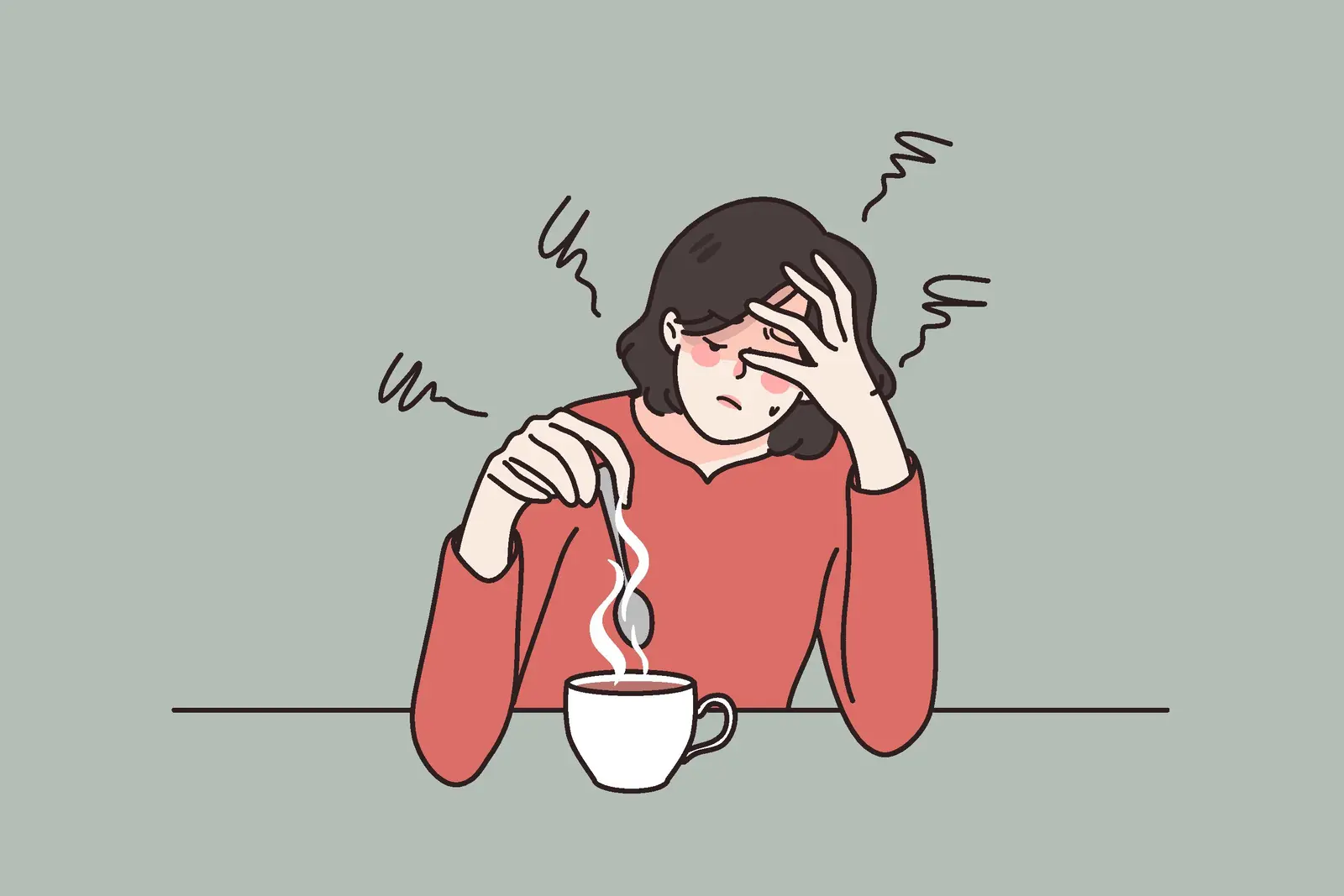
There are also long-term side effects to consider, which can be extremely dangerous: [5]
These health risks will vary depending on the amount of the substance taken and the duration of use.
There is also evidence that Dirty Sprite can lead to neuroleptic malignant syndrome. [6] This is a rare, but life-threatening, reaction to dopamine-blocking medications and antipsychotic drugs. It can lead to rapid heart rate and breathing, blood pressure changes, and high fever, and is a serious medical condition that requires immediate medical attention.
Several warning signs can indicate someone is using opioids, such as the codeine found in Dirty Sprite. These include: [7]
If you notice these warning signs in a loved one, you’ll want to investigate their behavior to see if they are abusing codeine.
Besides physical effects, using Dirty Sprite can also have these negative mental health effects: [8]
The codeine and promethazine in Dirty Sprite are both central nervous system (CNS) depressants, which slow essential functions.[9] The central nervous system is the brain and the spinal cord, the body’s primary control center. Taken together, these substances can reduce CNS functions to a dangerous level.
Codeine is often prescribed to relieve pain and suppress a cough, and it works by binding to the opioid receptors in the brain. [10] This reduces pain perception and can control the cough reflex. When codeine is used in large quantities, it can lead to euphoria and sedative effects as it depresses the central nervous system (CNS). When codeine is abused long-term, it can lead to addiction.
Promethazine is used to relieve the itching, sneezing, and runny nose that can accompany colds and allergies. It also has sedative effects. [11] When it is combined with codeine, the sedative effects become stronger, which can lead to more dangerous side effects.
Yes, people can become addicted to Dirty Sprite because of the substances it contains. Codeine is a highly addictive opioid, and when combined with the influence of promethazine, can result in an addiction to one or both drugs.
Signs that someone has become addicted to Dirty Sprite include:
Professional addiction treatment is the best approach to addressing and overcoming substance misuse. Reach out today for the support you or your loved one may need.
| Myth | Fact |
| “It’s just cough syrup, so it’s safe.” | Cough syrup is only safe at the prescribed dose for a specific illness. Drinking large amounts of codeine and promethazine is opioid misuse. |
| “It’s not a real opioid drug.” | Codeine is an opioid. It binds to the same brain receptors as other opioids and can cause dependence and fatal respiratory depression. |
| “You can’t get addicted to a drink.” | The delivery method doesn’t change the drug. Regular use can lead to tolerance, cravings, and opioid use disorder. |
| “Adding more makes it feel better.” | Higher amounts raise the risk of overdose, because both ingredients slow breathing and heart function. |
| “Mixing it with alcohol is fine.” | Alcohol is also a depressant. Combining them greatly increases the risk of unconsciousness, stopped breathing, and death. |
Dirty Sprite can be dangerous on its own, but when taken with other medications, it can cause even more serious health concerns. People taking any of these drugs can be at risk for adverse effects: [12]
The most dangerous combinations involve other depressants. Mixing Dirty Sprite with alcohol, benzodiazepines (such as Xanax or Valium), other opioids, sleep medications, or illicit drugs can suppress breathing and cause overdose. The medications listed below can also cause serious interactions with codeine, promethazine, or both. Always tell a doctor or pharmacist about every medication and substance you use.
This is not an exhaustive list by any means. The best choice to avoid serious health risks is to avoid using Dirty Sprite and prevent interactions with medications you may be taking.
An overdose is a medical emergency. Act immediately.
In the U.S., you can also call Poison Control at 1-800-222-1222 for guidance.
If you recognize the warning signs in someone you care about, these steps can help:
Parents should also know that codeine cough medicines are not recommended for children, and promethazine carries an FDA warning against use in children under 2 because of the risk of fatal breathing problems.
Since codeine is an opioid, it is important to seek treatment if someone is using Dirty Sprite. Detoxing from the drug is the first step. With medical supervision, withdrawal symptoms can be managed and treatment can begin.
Because codeine is an opioid, treatment for Dirty Sprite addiction follows the same evidence-based approach as other opioid use disorders:
If you or someone you love needs help, contact IKON Recovery at (844) 394-4566 or check your insurance options. You can also reach the free, confidential SAMHSA National Helpline at 1-800-662-4357.
It is also important to educate yourself on the dangers of using substances and the consequences they can have on your life. To make safer choices to avoid substance abuse, you should never share prescription medications or take them in ways they are not prescribed.
Reduce stress by practicing yoga and exercising so that you’re not tempted to use substances as an outlet. Surrounding yourself with a solid support network of people who are there to talk to you during difficult times is important, so you don’t feel like you need to turn to substances for comfort.
Finally, having safety plans on hand to handle risky situations can mean the difference between using substances and avoiding them.
[1] Person. (2021, January 19). Dirty Sprite Meaning & Origin. Dictionary.com. Retrieved from https://www.dictionary.com/e/slang/dirty-sprite/ on August 22, 2025.
[2] M;, R. W. J. M. (n.d.). Detection of pharmaceuticals in “dirty Sprite” using gas chromatography and Mass Spectrometry. Drug Testing and Analysis. Retrieved from https://pubmed.ncbi.nlm.nih.gov/34142460/ on August 22, 2025.
[3] Hart, M., Agnich, L. E., Stogner, J., & Miller, B. L. (2013, June 1). “Me and My Drank:” Exploring the Relationship Between Musical Preferences and Purple Drank Experimentation. American Journal of Criminal Justice. SpringerLink. Retrieved from https://link.springer.com/article/10.1007/s12103-013-9213-7 on August 22, 2025.
[4] [5] [8] Ware, O. D. (2023, September 22). Lean/SIZZURP ingredients, use, and coping with mental health symptoms. Substance Abuse: Research and Treatment. Retrieved from https://pmc.ncbi.nlm.nih.gov/articles/PMC10517614/ on August 22, 2025.
[6] Neuroleptic Malignant Syndrome: Symptoms & Treatment. Cleveland Clinic. (2025, June 2). Retrieved from https://my.clevelandclinic.org/health/diseases/22703-neuroleptic-malignant-syndrome on August 22, 2025.
[7] Opioids: Recognizing the Signs. (n.d.). Retrieved from https://health.ny.gov/community/opioid_epidemic/signs.htm on August 22, 2025.
[9] [11] NHS. (n.d.). NHS Choices. Retrieved from https://www.nhs.uk/medicines/promethazine/ on August 22, 2025.
[10] U.S. National Library of Medicine. (n.d.). Codeine: MedlinePlus Drug Information. MedlinePlus. Retrieved from https://medlineplus.gov/druginfo/meds/a682065.html on August 22, 2025.
[12] Mayo Foundation for Medical Education and Research. (n.d.). Promethazine and Codeine (Oral Route). Mayo Clinic. Retrieved from https://www.mayoclinic.org/drugs-supplements/promethazine-and-codeine-oral-route/description/drg-20060985 on August 22, 2025.
[13] Mayo Foundation for Medical Education and Research. (n.d.). Codeine (Oral Route). Mayo Clinic. Retrieved from https://www.mayoclinic.org/drugs-supplements/codeine-oral-route/description/drg-20074022 on August 22, 2025.
[14] U.S. National Library of Medicine. (n.d.). Opiate and Opioid Withdrawal: MedlinePlus Medical Encyclopedia. MedlinePlus. Retrieved from https://medlineplus.gov/ency/article/000949.htm on August 22, 2025.

© 2026 IKON Recovery.
Licensed by the State Department of Healthcare Services, License 2000964. Expiration 11/30/2026
All Rights Reserved. | Privacy Policy | Terms & Conditions