

Substances
Does Acid Show Up on a Drug Test? Understanding LSD Drug Detection

Substances
Lysergic acid diethylamide (LSD), commonly known as acid, is a hallucinogenic and dissociative drug that was once used as a treatment in psychotherapy. It no longer has widespread medical uses, but it’s gained popularity as a hallucinogenic drug on the illicit market.[1]
Despite its popularity as a party drug, acid is not as commonly abused as other illicit drugs like stimulants and opioids. It’s not routinely screened in standard drug tests, but specialized tests can detect LSD use in urine, blood, and hair samples.
Acid, or LSD, is a hallucinogenic drug that was initially synthesized in 1938 by Swiss chemist Albert Hofmann.[2] It was initially investigated as a potential sedative and analgesic, but its psychedelic properties were discovered accidentally in 1943. LSD later became a therapeutic drug for psychiatric conditions like schizophrenia and alcohol abuse, but it fell out of favor.
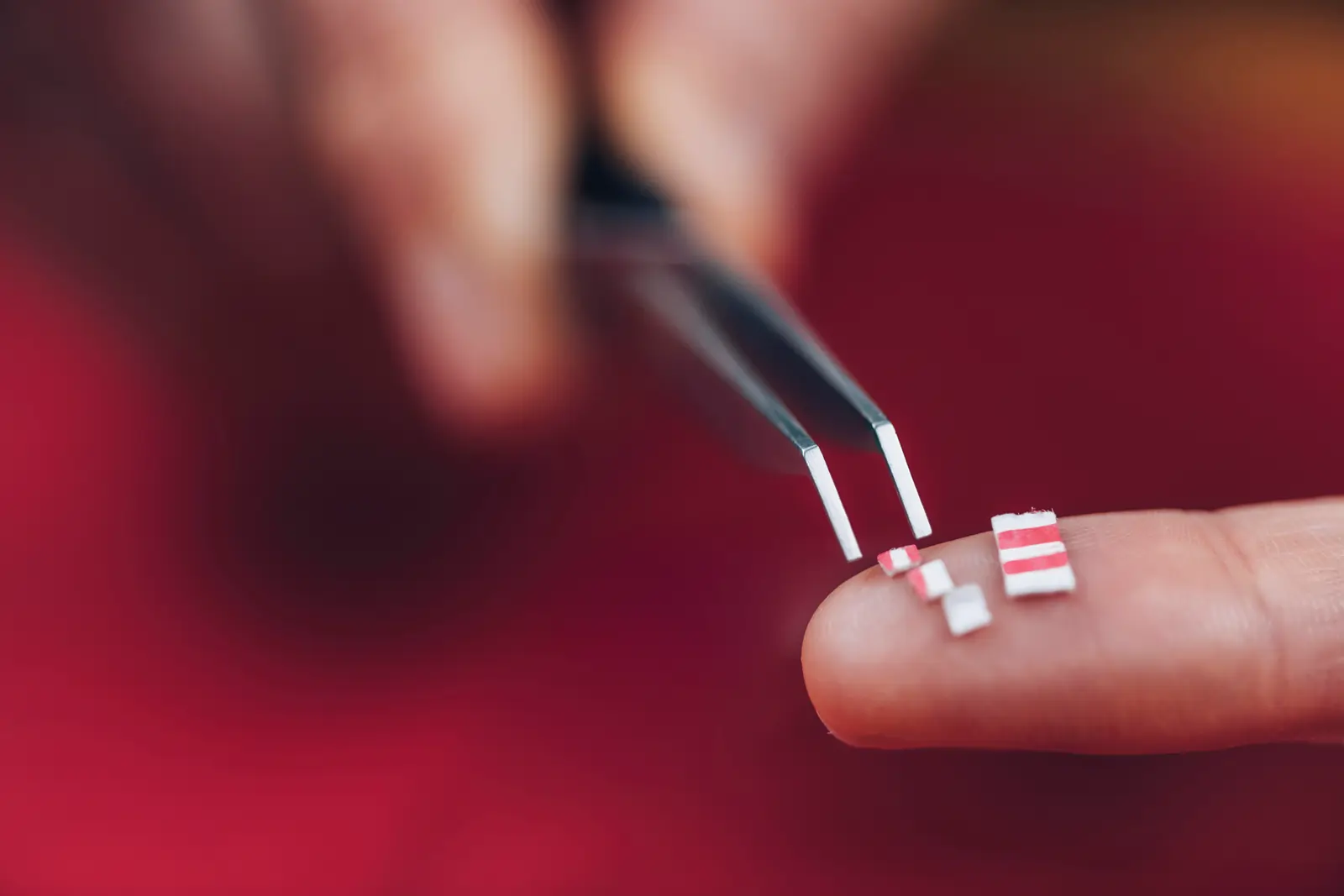
Now, acid is an illicit party drug known as dots, blotter, yellow sunshine, and Lucy in the sky with diamonds on the street. It’s used as a party drug for its mood-altering effects to enhance these environments.
Acid doesn’t cause physical dependence or addiction, but it is a potent psychedelic drug that can affect perception of senses, thoughts, and emotions. It has use in religious and spiritual ceremonies and rituals, but it can cause auditory and visual hallucinations, delusions, paranoia, and severe anxiety that can lead to a “bad trip.”
Several factors affect how long acid stays in the body. Just a small amount can lead to intense psychedelic effects of LSD. Most drug tests aren’t sensitive or specialized enough to detect it. It’s also rapidly absorbed and metabolized by the liver, resulting in a short detection window.
The liver metabolizes LSD when it’s taken orally and converts it to inactive compounds. About 1% of acid is excreted in the urine within 24 hours. Standard urine tests like those used for law enforcement and pre-employment screenings are not sensitive enough to detect the presence of LSD in urine samples, but specialized urine drug tests can.
Liquid-liquid extraction and ultra-high-performance liquid chromatography-tandem mass spectroscopy (UHPLC-MS/MS) are two available urine tests that can detect acid use. Based on research, some inactive byproducts (metabolites) of acid remain in urine at 16 to 43 times higher concentrations than the parent drug (LSD), but the study doesn’t indicate if these byproducts will be reliable for drug tests.[3]
LSD can be detected in blood samples using liquid-liquid extraction and UHPLC-MS/MS. According to one study, 13 blood samples containing LSD were kept at below-freezing temperatures and tested after 12 months. Researchers were able to detect LSD in samples taken up to 16 hours after administration, but only at concentrations of 200 mcg of LSD.[4] The samples that contained 100 mcg of LSD did not have detectable levels 8 hours after administration. The detectable levels of LSD decreased in both groups. 9 out of 24 samples were detectable after 16 hours in the group that received 100 mcg.[5]
Hair tests using hair samples have longer detection windows for most drugs compared to other drug testing methods. These tests utilize evidence from the hair shaft and its growth rate, enabling detection of drug use over extended periods.
LSD detectability in different drug tests is influenced by many factors, including the individual’s age and health, and the dosage of the LSD sample. With LSD in particular, the timing of the sample is crucial because the drug has a short half-life and doesn’t require high doses for effects. This dramatically shortens testing windows.
Acid’s effects and dosages vary significantly from individual to individual. Generally, a dose of 1 to 3 micrograms per kilogram can bring hallucinatory and dissociative effects like distorted perception of emotions, thoughts, and objects.[6]
The “trip,” or temporarily altered state of consciousness, can also vary by several factors, regardless of the dose. The experience can range from pleasurable and joyful (good trip) to anxiety-inducing or terrifying (bad trip). Flashbacks are common with acid and can happen just after coming out of the trip or even months or years later. Combining LSD with other drugs can increase the likelihood of experiencing flashbacks, but they can occur even after you stop using acid completely.
Some other effects of acid may include:[7]
The most significant risk of acid is related to the experience of the trip, rather than the drug itself. The altered state of consciousness can cause people to feel no inhibitions or fears, leading to dangerous activities. Bad trips, fear, anxiety, and stress can cause violent behaviors.
Physical risks of acid are rare but possible. LSD doesn’t have an extremely toxic effect on the organ systems like some other drugs, even at extremely high doses.
Experts don’t believe that LSD can cause physical addiction or dependence.[8] You can develop a tolerance, though, meaning you need higher and higher doses to experience the same psychoactive effects. LSD isn’t known to cause withdrawal symptoms or cravings if you stop taking it.
That said, you can become psychologically addicted to acid. This is characterized by a compulsive need to use acid, even if it causes problems in your life, health, or interpersonal relationships that can be difficult to overcome.
Acid addiction is fueled by underlying factors like other substance use disorders, so addiction treatment focuses on addressing the emotional, social, and psychological causes and addressing any psychological effects that may occur from acid use, such as psychosis. Treatment is personalized but may include group therapy, peer support groups, individual therapy, and behavioral therapies in an inpatient or outpatient setting.
Acid is a popular psychoactive party drug that can have powerful and sometimes unpredictable hallucinatory and dissociative effects. It only takes small doses of LSD to bring psychoactive effects, and the drug doesn’t last long in the body, so only specialized drug tests can detect the use of LSD or its byproducts.
[1] U.S. National Library of Medicine. (n.d.-a). Lysergide. National Center for Biotechnology Information. PubChem Compound Database. https://pubchem.ncbi.nlm.nih.gov/compound/5761#section=Absorption-Distribution-and-Excretion
[2] Massari, P., & Massari, P. (2021, July 28). A long, strange trip. The Harvard Kenneth C. Griffin Graduate School of Arts and Sciences. https://gsas.harvard.edu/news/long-strange-trip
[3] CJ;, K. K. C. P. (n.d.). LC-MS analysis of human urine specimens for 2-oxo-3-hydroxy LSD: Method validation for potential interferants and stability study of 2-oxo-3-hydroxy LSD under various storage conditions. Journal of Analytical Toxicology. https://pubmed.ncbi.nlm.nih.gov/12054358/
[4, 5] Dolder, P. C., Schmid, Y., Steuer, A. E., Kraemer, T., Rentsch, K. M., Hammann, F., & Liechti, M. E. (2017, October). Pharmacokinetics and pharmacodynamics of lysergic acid diethylamide in healthy subjects. Clinical Pharmacokinetics. https://www.ncbi.nlm.nih.gov/pmc/articles/PMC5591798/
[6] Hwang, K. A. J. (2023, July 10). Lysergic acid diethylamide (LSD) (archived). StatPearls [Internet]. https://www.ncbi.nlm.nih.gov/books/NBK482407/
[7] U.S. National Library of Medicine. (n.d.-a). Lysergide. National Center for Biotechnology Information. PubChem Compound Database. https://pubchem.ncbi.nlm.nih.gov/compound/5761
[8] Das, S., Barnwal, P., Ramasamy, A., Sen, S., & Mondal, S. (2016, June). Lysergic acid diethylamide: A drug of “use”? Therapeutic Advances in Psychopharmacology. https://pmc.ncbi.nlm.nih.gov/articles/PMC4910402/
[9] B;, E. (n.d.). Set, setting, and Matrix. Journal of Psychoactive Drugs. https://pubmed.ncbi.nlm.nih.gov/9250949/