
Substances
Can You Drink Rubbing Alcohol? Here’s What You Need To Know


Substances
Rubbing alcohol, or isopropyl alcohol, is an extremely toxic substance that can cause severe illness, permanent organ damage, or death if consumed. Unlike the ethanol found in alcoholic beverages, rubbing alcohol is a potent poison that should never be ingested under any circumstances.
Rubbing alcohol, or isopropyl alcohol, is a chemical compound commonly used as a disinfectant and cleaning agent.[1] Isopropyl rubbing alcohol typically contains water and may contain bitterants, dyes, or fragrances; ethanol-based rubbing alcohol requires denaturants for tax and regulatory purposes, but some commercial isopropyl products also include denaturing agents to discourage ingestion. Its name comes from its historical use as a medicinal rub to reduce fever and relieve muscle aches.
Unlike ethanol found in alcoholic beverages, isopropyl alcohol is manufactured through a chemical process involving the hydration of propylene.[2] This creates a clear, colorless liquid with a strong, distinctive odor. The substance rapidly evaporates at room temperature and is highly flammable, making proper storage essential. Healthcare settings commonly use 70 percent solutions for antiseptic purposes, while higher concentrations are often found in industrial and laboratory applications.
People may attempt to drink rubbing alcohol during periods of severe alcohol addiction when they cannot access or afford regular alcoholic beverages. During these moments of desperation, someone might turn to rubbing alcohol, mistakenly believing it will produce effects similar to drinking ethanol. This dangerous decision often stems from the intense cravings and impaired judgment that accompany alcohol use disorder.
Some people may also try drinking rubbing alcohol due to misinformation or confusion about its relationship to drinking alcohol. They might not understand that isopropyl alcohol is a completely different substance that acts as a poison in the human body. In rare cases, rubbing alcohol consumption may be attempted as a means of self-harm, particularly when someone is experiencing a mental health crisis and needs immediate support.
Poisoning severity is dose-dependent; small accidental sips may cause limited GI irritation and intoxication, while larger ingestions can cause severe toxicity and may require emergency care. The liver converts isopropyl alcohol into acetone; the parent alcohol is the principal driver of CNS depression, with acetone contributing and accounting for ketosis/osmolar gap.
Isopropyl alcohol is more potent as a CNS depressant than ethanol, leading to deeper sedation, respiratory depression, and hypotension at lower doses. Isopropyl alcohol classically causes ketosis without significant metabolic acidosis, but acidosis can occur in severe poisoning (e.g., due to lactic acidosis from shock/hypoperfusion). While rare, kidney injury and brain damage can occur in severe cases, typically secondary to hypotension, hypoxia, or prolonged CNS depression.
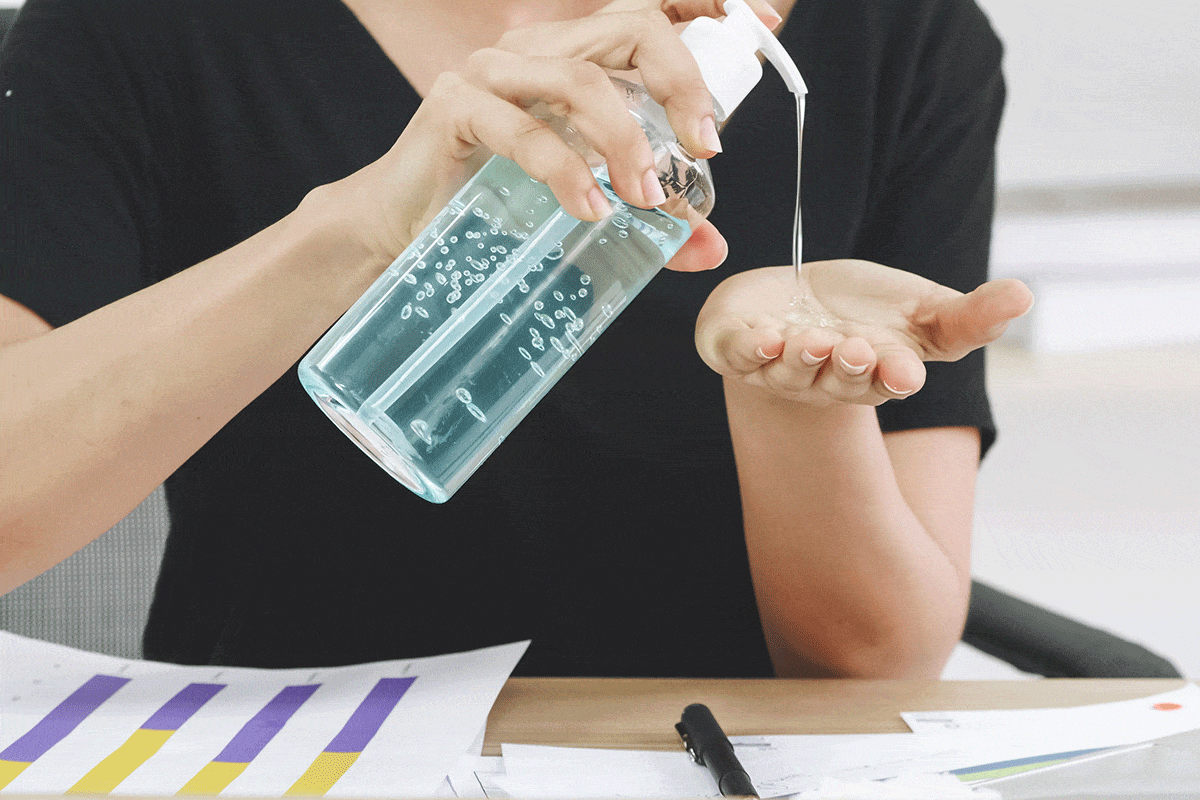
Yes, rubbing alcohol is far more toxic than drinking alcohol, requiring much smaller amounts to cause severe poisoning.[4] While ethanol concentration matters, eight ounces of 40% spirits typically causes marked intoxication in most adults, but the lethal risk is less than with isopropanol at similar volumes. Isopropanol ingestion may be fatal without rapid medical intervention, whereas ingestion of similar volumes of beverage alcohol is far less likely to be fatal. The concentration of isopropyl alcohol, typically 50 to 91 percent, makes it particularly dangerous compared to alcoholic beverages that contain much lower percentages of ethanol.
Isopropanol is metabolized by alcohol dehydrogenase to acetone; the apparent rate depends on multiple factors. Ethanol competitively inhibits ADH and can slow isopropanol metabolism. Ingesting even a small amount of rubbing alcohol can lead to severe complications, including CNS depression, hypotension, and gastrointestinal irritation. Isopropyl rubbing alcohol typically contains water and sometimes bitterants/dyes or fragrance; ‘denaturants’ are relevant to ethanol-based rubbing alcohol, not isopropyl formulations.
The symptoms of rubbing alcohol poisoning include:[5]
If you or someone else accidentally swallows isopropyl alcohol, take these immediate actions:
When someone struggles with alcohol addiction, reaching out for help is a courageous and vital first step toward recovery. Multiple effective treatment options and support systems exist to help people overcome alcohol dependence safely and build lasting sobriety. Professional treatment addresses both the physical and psychological aspects of addiction while providing essential tools for long-term recovery.
Professional help options include medically supervised detox programs, which provide safe withdrawal management and around-the-clock medical care. Inpatient rehabilitation offers intensive treatment in a structured environment, while outpatient programs allow people to receive therapy while maintaining their daily responsibilities. These programs typically combine evidence-based treatments like cognitive behavioral therapy, medication-assisted treatment when appropriate, and comprehensive counseling services.
Support groups and community resources play a vital role in recovery. Organizations like Alcoholics Anonymous provide peer support, while family therapy helps heal relationships and build a strong support network. Local mental health centers often offer sliding-scale payment options to make treatment more accessible
[1] Walls, R. (2018). Isopropyl Alcohol – an overview | ScienceDirect Topics. Www.sciencedirect.com. https://www.sciencedirect.com/topics/biochemistry-genetics-and-molecular-biology/isopropyl-alcohol on January 28, 2025
[2] Humans, I. W. G. on the E. of C. R. to. (2012). ISOPROPYL ALCOHOL MANUFACTURE BY THE STRONG-ACID PROCESS. In www.ncbi.nlm.nih.gov. International Agency for Research on Cancer. https://www.ncbi.nlm.nih.gov/books/NBK304434/ on January 28, 2025
[3] Ethanol Metabolism – an overview | ScienceDirect Topics. (2012). Sciencedirect.com. https://www.sciencedirect.com/topics/biochemistry-genetics-and-molecular-biology/ethanol-metabolism on January 28, 2025
[5] Ashurst, J. V., & Nappe, T. M. (2019, March 15). Isopropanol Toxicity. Nih.gov; StatPearls Publishing. https://www.ncbi.nlm.nih.gov/books/NBK493181/ on January 28, 2025
[6] Isopropanol overdose Information | Mount Sinai – New York. (n.d.). Mount Sinai Health System. https://www.mountsinai.org/health-library/poison/isopropanol-overdose on January 28, 2025

© 2026 IKON Recovery.
Licensed by the State Department of Healthcare Services, License 2000964. Expiration 11/30/2026
All Rights Reserved. | Privacy Policy | Terms & Conditions